

Root Canal Treatment (RCT) in Phuket or Endodontic Treatment
Do you have significant dental pain or discomfort? Whenever your teeth have an infection, you may think, why not have them removed? This is not a good idea—nothing will look, feel, or function like your own natural tooth. Instead, you may be in need of a root canal treatment in Phuket, the very first choice of dental treatment to save your tooth.
At New Smile Dentists, our experienced specialists are dedicated to restoring your oral health in the most pleasant and effective manner possible. We provide high-quality root canal treatments that fit your specific requirements, leaving you pain-free while preserving your original tooth.
What is Root Canal Treatment?
A root canal treatment is a technique that may save a broken or diseased tooth. When the inner pulp of a tooth gets infected due to decay or damage, it can go on to cause severe pain and possibly tooth loss if left untreated. Root canal treatments include removing the diseased pulp, cleaning and disinfecting the tooth’s inner chambers, and sealing it to avoid further harm.
Why Do You Need Root Canal Treatment?
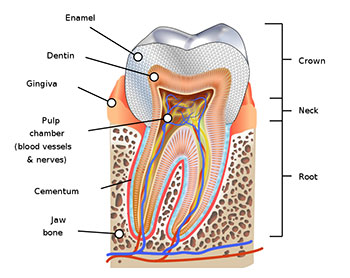
Our dentists in Phuket would consider performing root canal treatments when the tooth is found with the following problems:
– The dental pulp (caries exposed pulp) is involved in the decay of the dental caries.
– Fracture or a crack line that damages the dental pulp.
– An enamel that is worn out and is damaging the dental pulp.
– Endo-periodontal disease infection.
– The presence of a history of trauma and dental pulp inflammation or an infection that has been left untreated.
How is the Root Canal Treatment performed?
At New Smile Dentists dental clinic in Phuket, an Endodontist (a specialist for RCT) will be the one doing the RCT for our patients using the latest technology in root canal treatment.
The following outline are the steps of Root Canal Treatment:
- Diagnosis – First, our dentist will examine your teeth using X-rays to evaluate the degree of the infection or damage.
- Anesthesia – A local anesthetic will be administered to numb the afflicted region, ensuring a painless encounter.
- Cleaning and Shaping – The infected pulp is extracted, and the tooth’s inner chambers are cleansed and shaped.
- Sealing the Tooth – After a thorough cleaning, the tooth is sealed with a rubber-like substance known as gutta-percha which is a root canal filling. Another temporary filling follows on top of gutta-percha, ready for the ultimate restoration.
- Restoration – Finally, the tooth may be repaired with a crown or filling to prevent further harm.
Our dentist in Phuket employs cutting-edge technology to guarantee that the root canal treatment operation is conducted swiftly and effectively, with long-term effects.
Phuket Root Canal Cost
The root canal cost varies according to the severity of the illness and the tooth being treated. At New Smile Dentists, we provide reasonable pricing for root canal treatments in Phuket, guaranteeing that you get high-quality care at an accessible rate.
– The dental pulp (caries exposed pulp) is involved in the decay of the dental caries.
– Fracture or a crack line that damages the dental pulp.
– An enamel that is worn out and is damaging the dental pulp.
– Endo-periodontal disease infection.
– The presence of a history of trauma and dental pulp inflammation or an infection that has been left untreated.
Latest Technology in Root Canal Treatment at New Smile Dentists

With our root canal treatment in Phuket, our endodontists make use of DENTAL MICROSCOPES throughout the root canal treatment. High magnification and illumination of the surgical area can reveal fine details, aiding the specialists in managing any difficult case with enhanced accuracy.
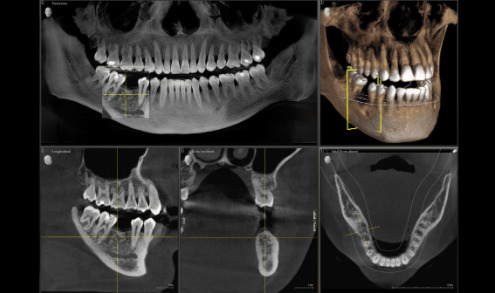
With our 3D IMAGING system, specialists can make more informed diagnosis and create a personal treatment plan. 3D imaging helps specialists to see areas radiographically and intraorally and have the capacity to pinpoint calcified canals efficiently.
Advancements of File Designs and Metallurgy (NiTi Files) can also facilitate the management of the preparation stage.
With the latest technologies at our clinic for root canals in Phuket, we can perform non-surgical root canal treatment procedures efficiently.
Why Might I Need Another Root Canal Treatment (Retreatment)?
At times, a tooth that was previously treated fails to heal or a complication arises. This can occur for the following reasons:
– A narrow, curved or complicated canal anatomy was not properly treated
– Delay of the permanent restoration
– A fracture of the tooth
– A loose, cracked, broken crown or filling lead to a new infection to the tooth
This is when a RETREATING of the root canal treatment may be a second chance to save a tooth.
Frequently Asked Questions
1. What is a root canal treatment?
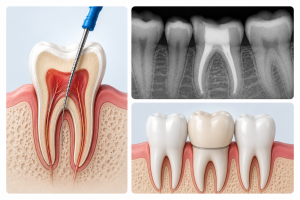
A root canal treatment is a procedure used to save a tooth when the nerve inside becomes infected or severely damaged. The infected tissue is removed, the inside of the tooth is cleaned and disinfected, and the canals are sealed to prevent further infection. In many cases, a crown is recommended afterward to strengthen the tooth.
2. How do I know if I need a root canal?
Common signs that you may need a root canal include:
- Persistent toothache
- Pain when biting or chewing
- Sensitivity to hot or cold that lingers
- Swollen or tender gums
- A pimple-like bump on the gum
- Tooth discoloration
However, some infected teeth cause little or no pain. A dental examination and X-rays are the best way to determine whether root canal treatment is needed.
3. Is a root canal painful?
Modern root canal treatment is usually no more uncomfortable than having a filling. Local anaesthetic keeps the tooth numb during the procedure, and most patients experience relief from the pain caused by the infection. Mild soreness afterward is normal and can usually be managed with over-the-counter pain medication.
4. How long does a root canal take?
The length of treatment depends on the complexity of the tooth. Most root canals can be completed in one or two visits. Front teeth are generally simpler, while molars have more canals and may require additional treatment time.
5. Can I avoid a root canal by taking antibiotics?
No. Antibiotics may temporarily reduce swelling or control the spread of infection, but they cannot remove infected tissue from inside the tooth. Without root canal treatment or extraction, the infection is likely to return.
6. Is it better to remove the tooth instead of having a root canal?
Whenever possible, saving your natural tooth is usually the best option. A successful root canal allows you to keep your own tooth, maintain normal chewing function, and preserve the surrounding bone.
However, in some situations, removing the tooth may be the better choice. Extraction may be recommended if:
- The tooth is severely cracked or split below the gum line and cannot be restored.
- There is extensive tooth decay, leaving too little healthy tooth structure to support a filling or crown.
- Advanced gum disease has caused significant bone loss, making the tooth loose.
- Previous root canal treatment has failed, and retreatment or surgery is unlikely to be successful.
- The tooth has a vertical root fracture, which usually cannot be repaired.
- The tooth has a very poor long-term prognosis compared with replacement options such as a dental implant or bridge.
- Keeping the tooth would require extensive, costly treatment with an uncertain outcome.
Every case is different. Your dentist will evaluate the condition of the tooth, surrounding bone, and gums before recommending whether saving the tooth or removing it will provide the best long-term result.
7. Will I need a crown after a root canal?
In many cases, yes—especially for back teeth.
After a root canal treatment, the tooth is no longer vital. The infected nerve and blood vessels inside the tooth have been removed, so it no longer has its natural blood supply or nerve tissue. While the tooth can still function normally, it no longer has the same biological properties as a living tooth.
Over time, a non-vital tooth may:
- Become more prone to cracking or fracturing because it is no longer nourished from within.
- Pain when biting or chewing
- Gradually darken or become more yellow, grey, or brown compared with the surrounding natural teeth. This is particularly noticeable in front teeth and can affect the appearance of your smile.
- Be less able to withstand heavy chewing forces, especially if much of the original tooth structure has already been lost due to decay, trauma, or large fillings.
For back teeth, a dental crown is usually recommended to protect the tooth from fracture and restore its strength.
For front teeth, the treatment depends on how much healthy tooth structure remains and the cosmetic appearance. If the tooth becomes discoloured after root canal treatment, your dentist may recommend:
- Internal bleaching, which lightens the tooth from the inside.
- A porcelain veneer, if the tooth is structurally sound but the appearance needs improvement.
- A ceramic crown, if the tooth is both weakened and significantly discoloured.
Every tooth is different. Your dentist will recommend the most appropriate restoration based on the tooth’s strength, position, function, and aesthetic requirements.
8. How successful is root canal treatment?
Root canal treatment has a very high success rate, often exceeding 90% when performed properly and followed by a good final restoration. Maintaining good oral hygiene and attending regular dental check-ups can help the treated tooth last for many years, often a lifetime.
9. What happens if I delay root canal treatment?
Delaying treatment can allow the infection to worsen. The infection may spread to the surrounding bone, cause an abscess, increase pain and swelling, and in some cases make the tooth impossible to save. Early treatment usually leads to a simpler procedure and a better long-term outcome.
10. Can a tooth need another root canal after it has already been treated?
Yes, although many root canal treatments are successful for years, a previously treated tooth can sometimes become infected again. This may happen because of new decay, a cracked tooth, or complex root canal anatomy. In these cases, retreatment or endodontic surgery may be recommended to save the tooth.